Back to Main Menu


TORQUE TRANSDUCERS
High Performance Torque Measurement for Static & Rotating Systems
We design and manufacture torque transducers for applications where accurate and repeatable measurement is critical. From laboratory test rigs to rotating drivetrains and industrial machinery, our sensors are engineered to deliver stable, high-quality torque data for development, validation, control and performance analysis.
Home > Torque Transducers




What is a Torque Transducer?
Torque transducers are devices used to measure rotational force within mechanical systems. By converting torque into an electrical output signal, they enable engineers to monitor and analyse the performance of motors, gearboxes, drives and rotating equipment.
Most modern torque transducers utilise strain gauge technology, where gauges are bonded directly to a sensing element. As torque is applied, the element experiences minute deformation which is detected by the strain gauges and converted into a proportional output signal.
Torque measurement plays a vital role in product development, performance testing and process control, helping engineers verify efficiency, identify losses and validate designs before deployment.
How Does a Torque Transducer Work?
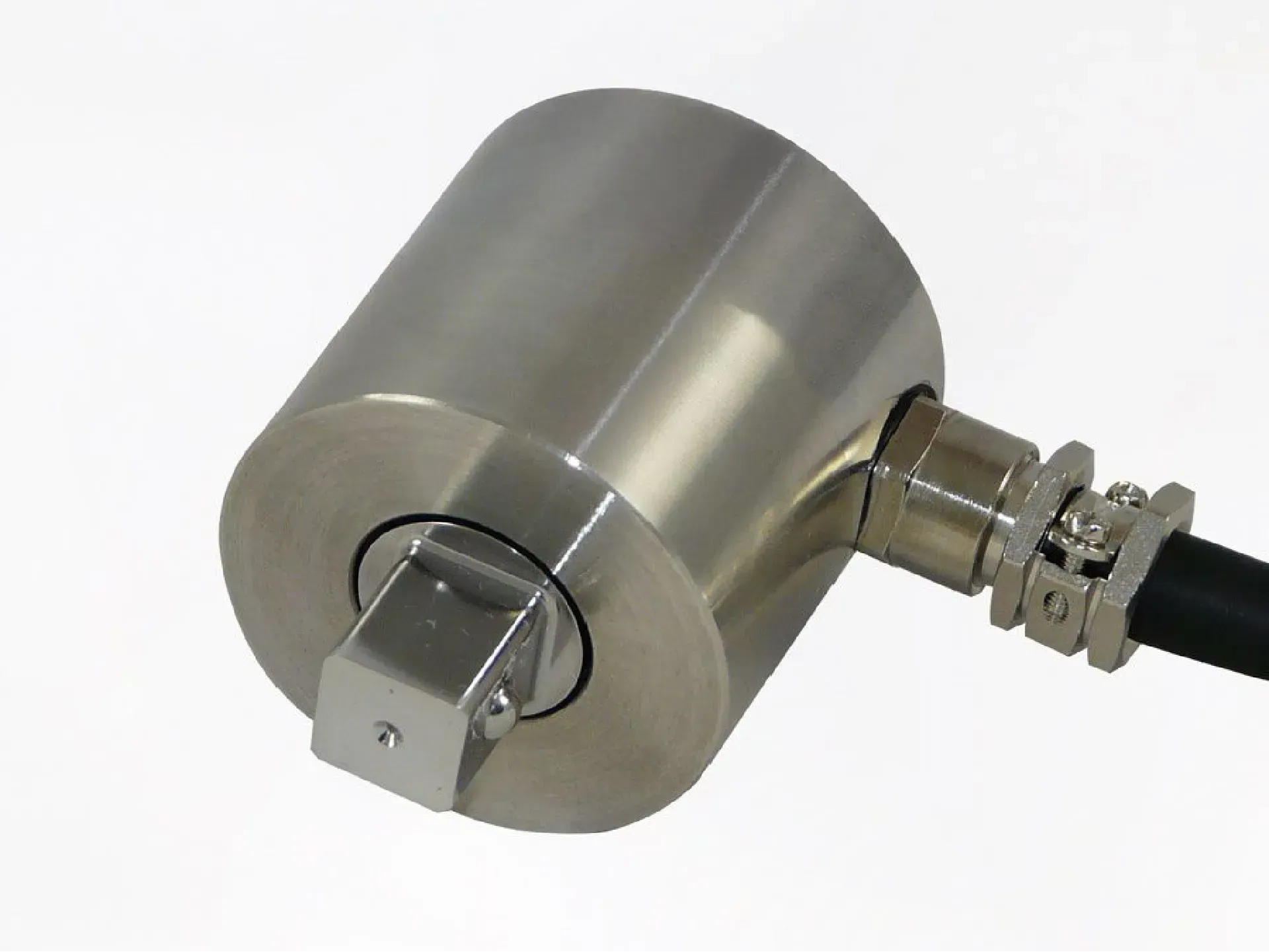
Strain gauge torque transducers measure rotational force by detecting the small deformations that occur within a sensing element when torque is applied. As the element twists under load, strain gauges bonded to its surface experience minute changes in resistance proportional to the amount of torque being transmitted.
These resistance changes are converted into an electrical output signal, allowing torque to be accurately monitored, displayed and recorded. The resulting data can be used for performance analysis, product development, process control and condition monitoring across a wide range of applications.
The operating principle is similar for both reaction and rotary torque transducers. Reaction torque transducers are fixed in position and measure static torque, whilst rotary torque transducers are designed to measure torque on rotating shafts. In both cases, strain gauge technology provides highly accurate and repeatable torque measurement, making it a trusted solution for testing and industrial applications.
Types of Torque Transducers
Torque transducers are generally available in two configurations: static (reaction) torque transducers and rotary torque transducers. The most suitable option depends on whether torque is being measured within a stationary or rotating system.
Static torque transducers, also known as reaction torque transducers, are designed to measure torque without continuous shaft rotation. They are commonly used for testing motors, actuators, valves and other applications where rotational force must be monitored within a fixed installation.
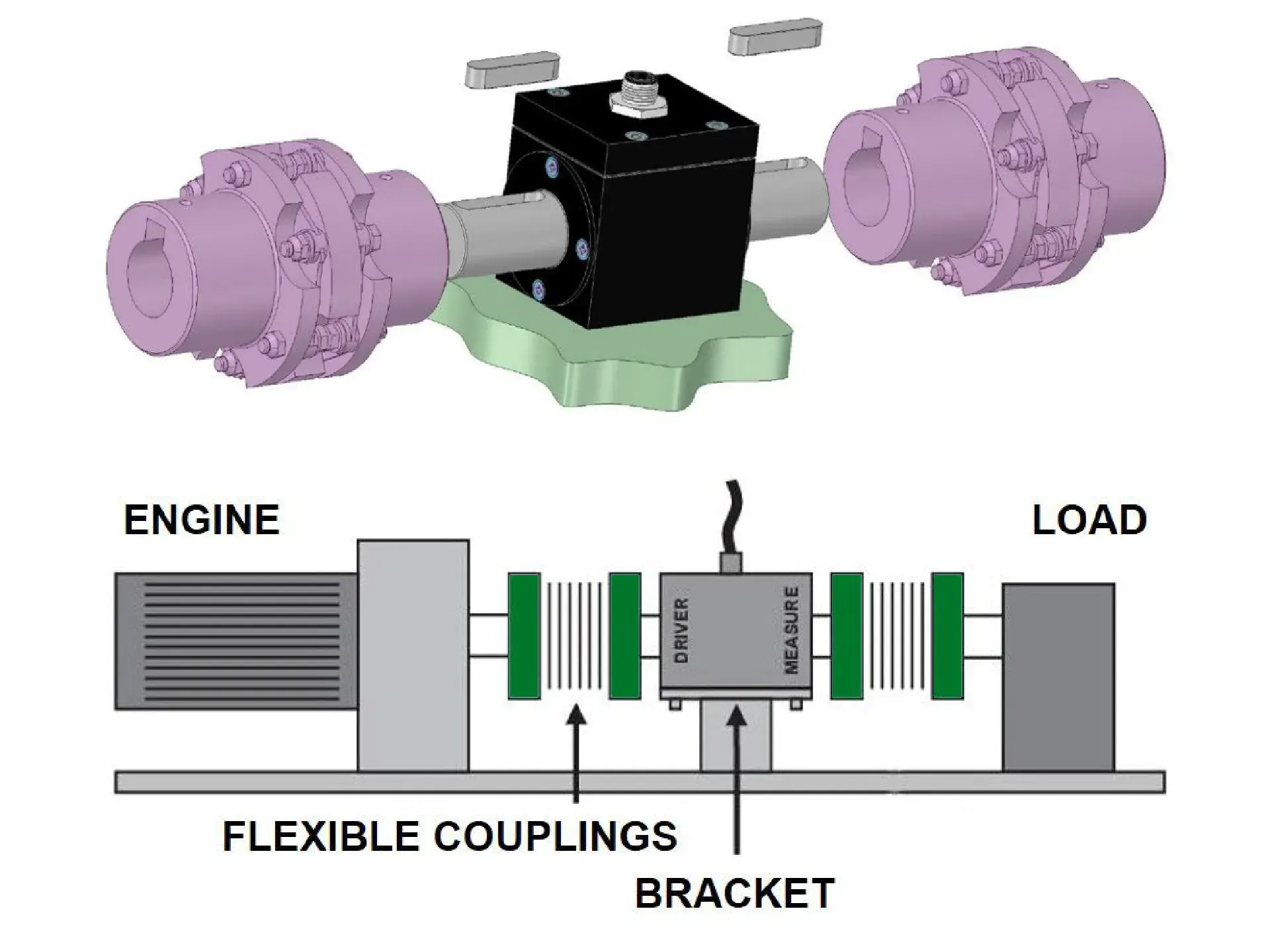
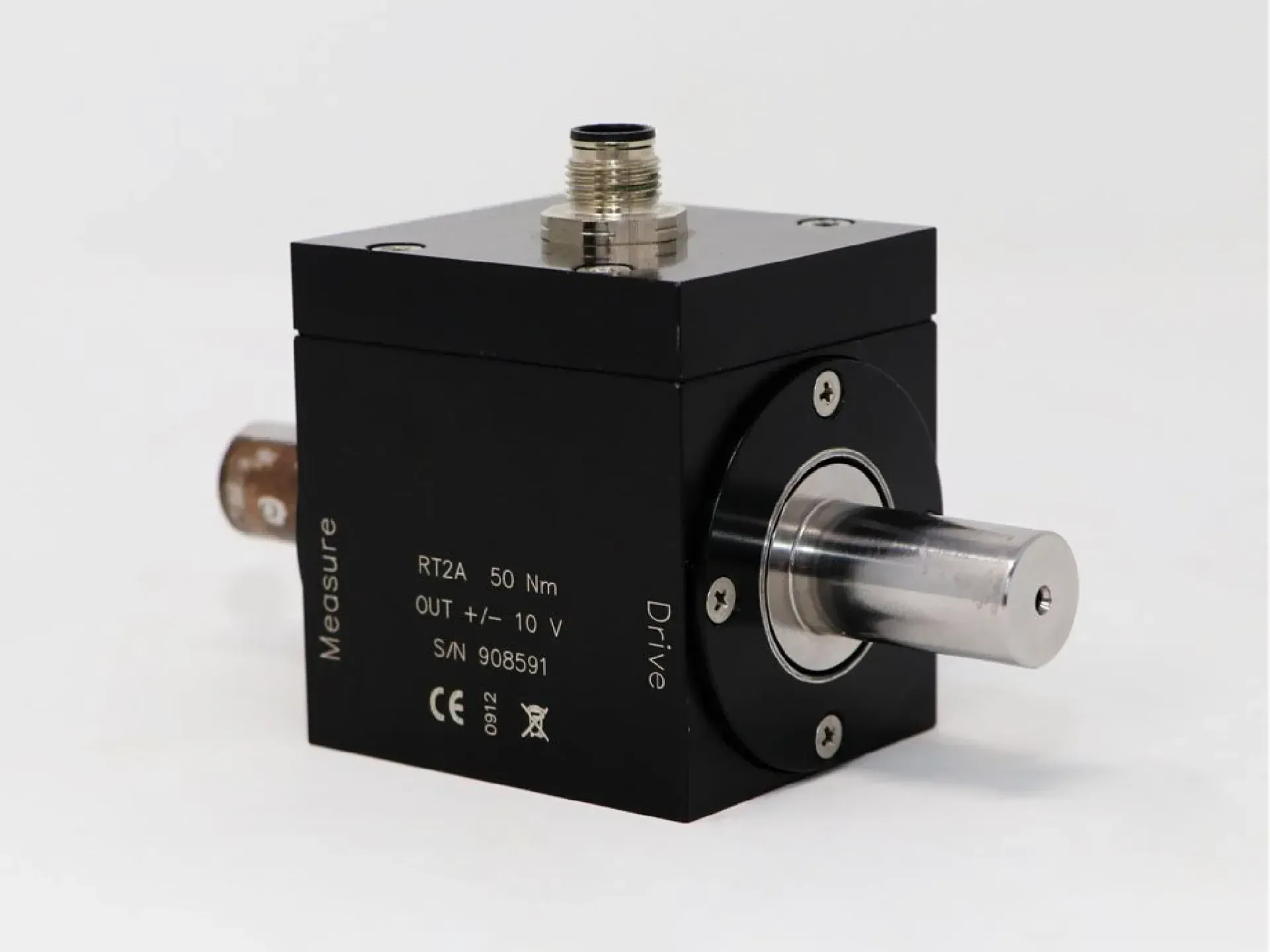
Rotary torque transducers are designed to measure torque on rotating shafts and machinery. They are commonly used in applications such as motor testing, gearbox development and powertrain analysis, where torque data must be collected whilst components are in motion.
Choosing the Right Torque Transducer
Torque Capacity
Select a rated torque comfortably above the maximum expected operating load, while considering peak, transient and overload conditions to protect the transducer without sacrificing measurement sensitivity.
Rotational Speed
For rotary applications, maximum operating speed is critical. The transducer must be suitable for the required RPM, duty cycle and dynamic conditions while maintaining reliable signal transmission.
Accuracy Requirements
Consider the accuracy actually required by the application, including non-linearity, hysteresis, repeatability and temperature effects. Higher accuracy may be essential for high end test programs or calibration work.
Interfacing
Consider both mechanical and electrical integration. Flanges, bolt patterns, shaft couplings, keyways and alignment must suit the installation, while the output signal must interface correctly with the DAQ, ECU or control system.

Benefits Of Strain
Gauge Technology
Strain gauge technology remains one of the most widely used methods of torque measurement due to its long-term reliability. Suitable for both static and rotary torque transducers, it provides precise torque data across a wide range of applications.
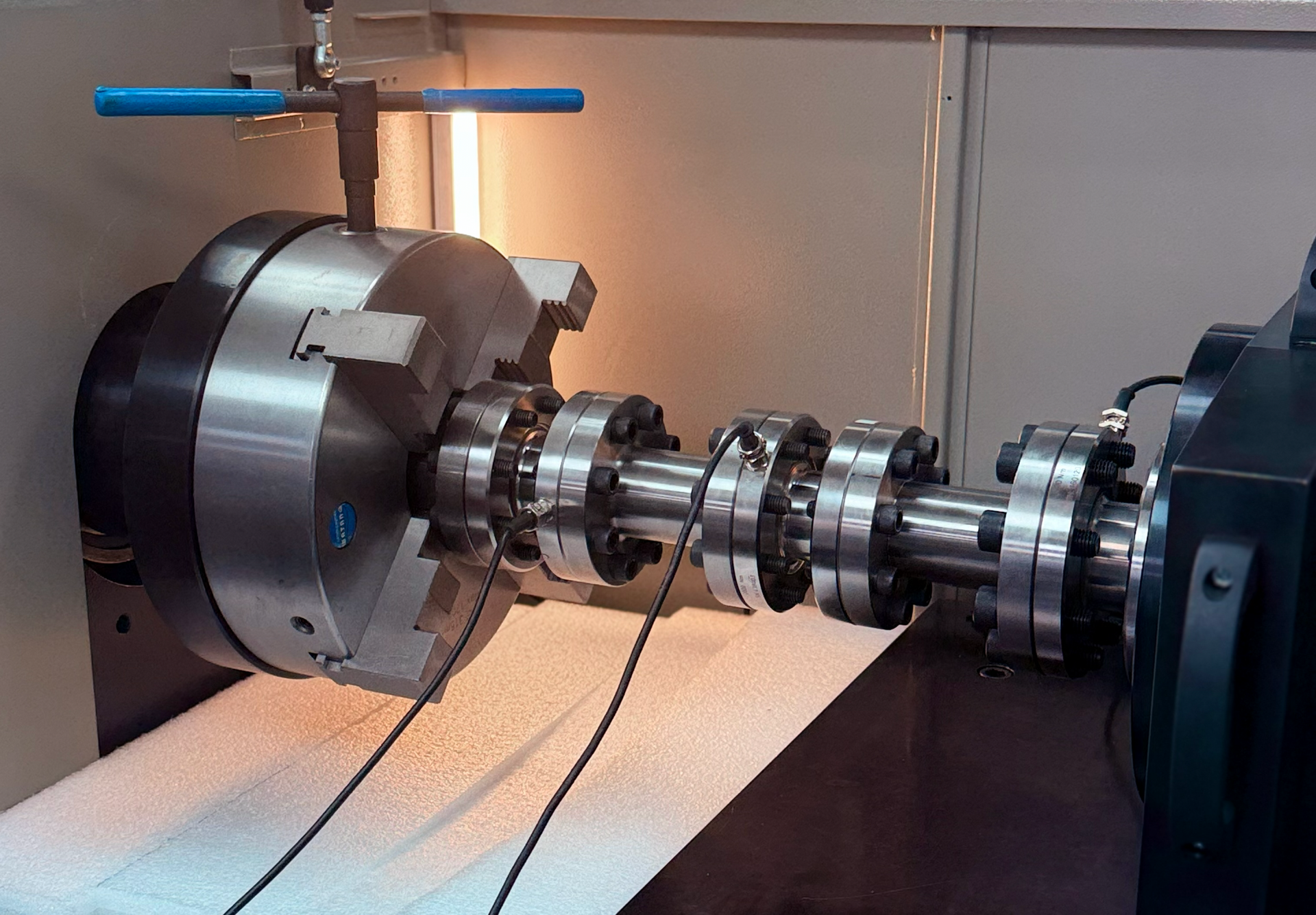
Torque Calibration
Our advanced electromechanical servo-controlled test frame enables torque application of up to 5000 Nm in both clockwise and anti-clockwise directions, with programmable control and dwell functionality to support precise, repeatable calibration in line with recognised standards such as BS 7882:2017.
Frequently Asked Questions
What is a torque transducer and how does it work?
A torque transducer measures a twisting moment or torque and converts it into an electrical signal. Strain gauges are typically bonded to an elastic shaft or sensing element and arranged in a Wheatstone bridge to detect the shear strain generated by applied torque.
The resulting electrical output is proportional to torque and can be measured directly in mV/V or conditioned into an amplified analogue or digital signal.
Torque transducers can be categorised as either static/reaction devices, or rotary sensors, depending on whether the measured component rotates.
What is the difference between a torque sensor and a torque transducer?
The terms torque sensor and torque transducer are frequently used interchangeably. Both generally describe a device that converts applied torque into an electrical measurement signal.
Torque transducer is often used in measurement and calibration applications, while torque sensor is a broader term commonly encountered in industrial and control applications. In practice, the required torque range, accuracy, speed, mounting arrangement and electrical interface are more important than the terminology used.
What is the difference between a static and rotary torque transducer?
A static or reaction torque transducer measures torque where the sensing element itself does not rotate. A rotary torque transducer measures torque in a continuously rotating shaft or drivetrain.
Rotary measurement requires a means of transferring power and measurement data between the rotating and stationary systems. Depending on the application, this may use slip rings, inductive coupling or wireless telemetry.
Reaction torque measurement is generally mechanically and electrically simpler as continuous rotation need not be accounted for.
How is torque measured on a rotating shaft?
Torque on a rotating shaft can be measured using either an inline rotary torque transducer or by directly instrumenting the shaft with strain gauges.
For direct shaft measurement, strain gauges are typically positioned to measure torsional shear strain and connected as a Wheatstone bridge. Power and measurement data can then be transferred from the rotating shaft using telemetry.
This approach is particularly useful where installing a conventional inline torque transducer would alter the drivetrain geometry, stiffness or packaging.
Can an existing driveshaft or shaft be converted into a torque transducer?
Yes. Many existing shafts and driveshafts can be instrumented directly with strain gauges to measure torque without inserting a separate inline torque transducer.
The shaft geometry, material, torque range, operating speed, temperature and available space for strain gauges and telemetry must first be assessed.
PCM can strain gauge existing shafts and integrate suitable rotating telemetry, allowing torque to be measured directly on the component in its normal operating configuration.
How accurate are torque transducers?
Torque transducer accuracy depends on characteristics including non-linearity, hysteresis, repeatability, zero stability, temperature effects and sensitivity to parasitic loads.
The complete measurement chain, including instrumentation and calibration, must also be considered.
For precision measurement, calibration should be traceable to appropriate torque standards, performed over the required operating range and, where applicable, in both clockwise and anticlockwise directions.
Can torque transducers measure clockwise and anticlockwise torque?
Yes. Many strain gauge torque transducers can measure torque in both clockwise and anticlockwise directions.
The electrical output changes polarity as the direction of applied torque reverses. Where both directions are used, calibration can be performed in clockwise and anticlockwise torque so that the performance of the complete measurement system is characterised in both directions.
What industries use torque transducers?
Torque transducers are used throughout automotive and motorsport development, aerospace, manufacturing, electric motor and gearbox testing, powertrain development, robotics, energy, research and calibration.
Typical applications include dynamometers, electric motor testing, driveshaft measurement, gearbox development, fastening systems, torsional testing and production-line monitoring.
How often should a torque transducer be calibrated?
Calibration frequency depends on usage, required uncertainty, stability, operating environment and the severity of loading.
A 12-month interval is commonly adopted initially, with the interval subsequently reviewed using calibration history. Sensors exposed to repeated high loads, overloads, shock, high temperatures or critical measurements may require more frequent calibration.
A torque transducer should also be checked following an overload, repair or event that could have affected its mechanical or electrical characteristics.
How do I choose the right torque transducer?
Start with the required torque range and determine whether the measurement is static or rotating. Then consider maximum and overload torque, rotational speed, accuracy, mechanical interfaces, axial and radial loads, available space, operating temperature and required electrical output.
For rotary applications, maximum rotational speed and the method of transferring data from the rotating sensor are particularly important.
PCM can also develop custom torque measurement solutions or instrument existing components where an off-the-shelf inline torque transducer is unsuitable.
What is torque transducer calibration?
Torque transducer calibration establishes the relationship between applied reference torque and the transducer's electrical or indicated output.
Known torques are applied over the required range and the resulting measurements are compared with traceable reference standards. Depending on the calibration, characteristics such as repeatability, interpolation error and reversibility can be evaluated.
PCM has in-house torque calibration capability for torque transducers and complete torque measurement systems.