Back to Main Menu


Supporting Young Engineers: WMG Students Visit PCM
Michael Wimbury | 5th March 2026
Bringing Theory Into Practice
Recently, we welcomed six students from the WMG Academy to our facility for a day exploring the world of load measurement and precision engineering.
The visit was designed to give students a closer look at how engineering concepts move from theory into practice. From the fundamentals of load cell design to the detailed processes involved in manufacturing and calibration, the day offered a practical insight into how our precision measurement systems are developed in a real environment.
By opening our doors to the next generation of engineers, we hope to help bridge the gap between classroom learning and industrial application, while also giving students a clearer understanding of the career pathways available within engineering.
Introducing the Fundamentals of Load Measurement
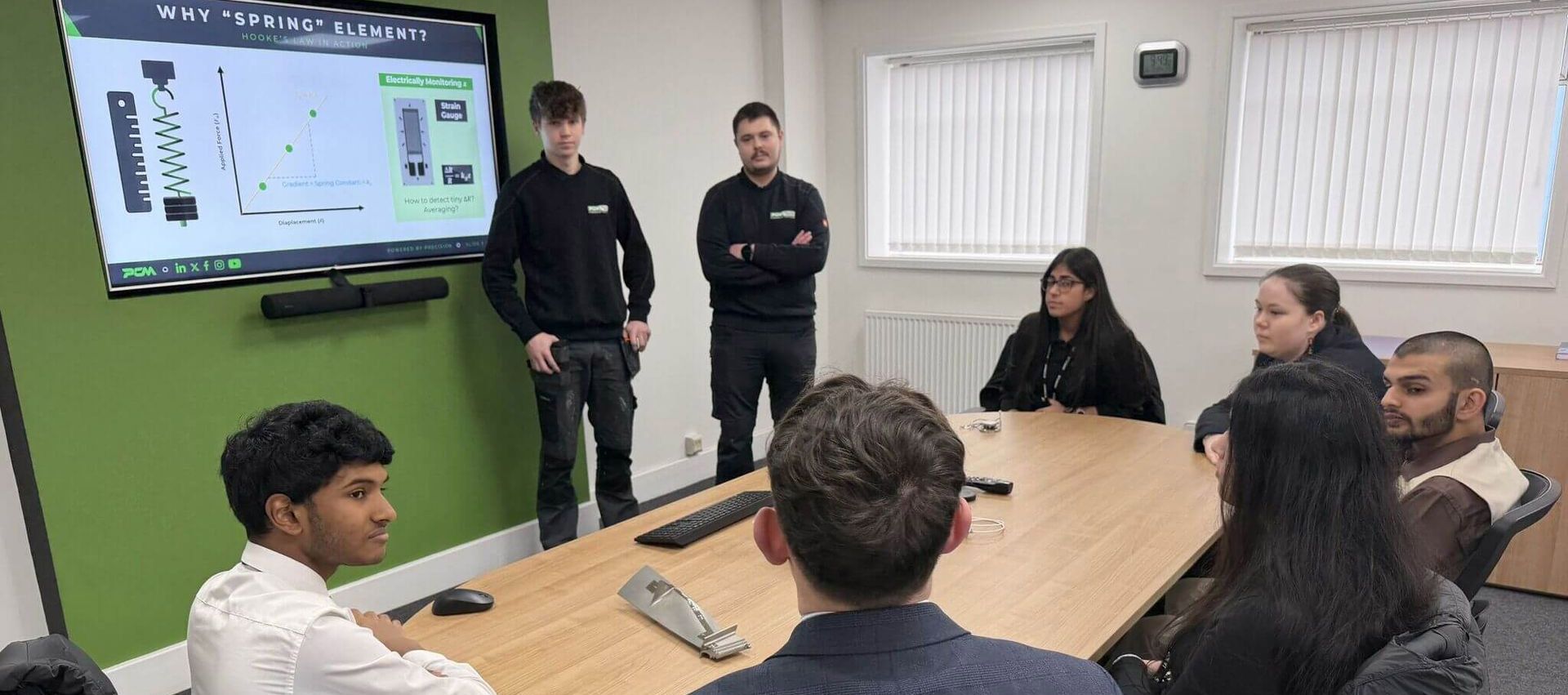
The visit began with an overview of the engineering principles behind modern load measurement systems.
Students were introduced to the core concepts that allow force and weight to be accurately measured, including material behaviour, strain gauging and the process that converts mechanical stress into measurable data. These principles form the foundation of load cell design and are critical to ensuring accurate and repeatable results across demanding applications.
By first exploring the theory behind our systems, the students could better understand what they would later see in our facility, where raw materials are transformed into calibrated force sensors.
From Metal to Measurement
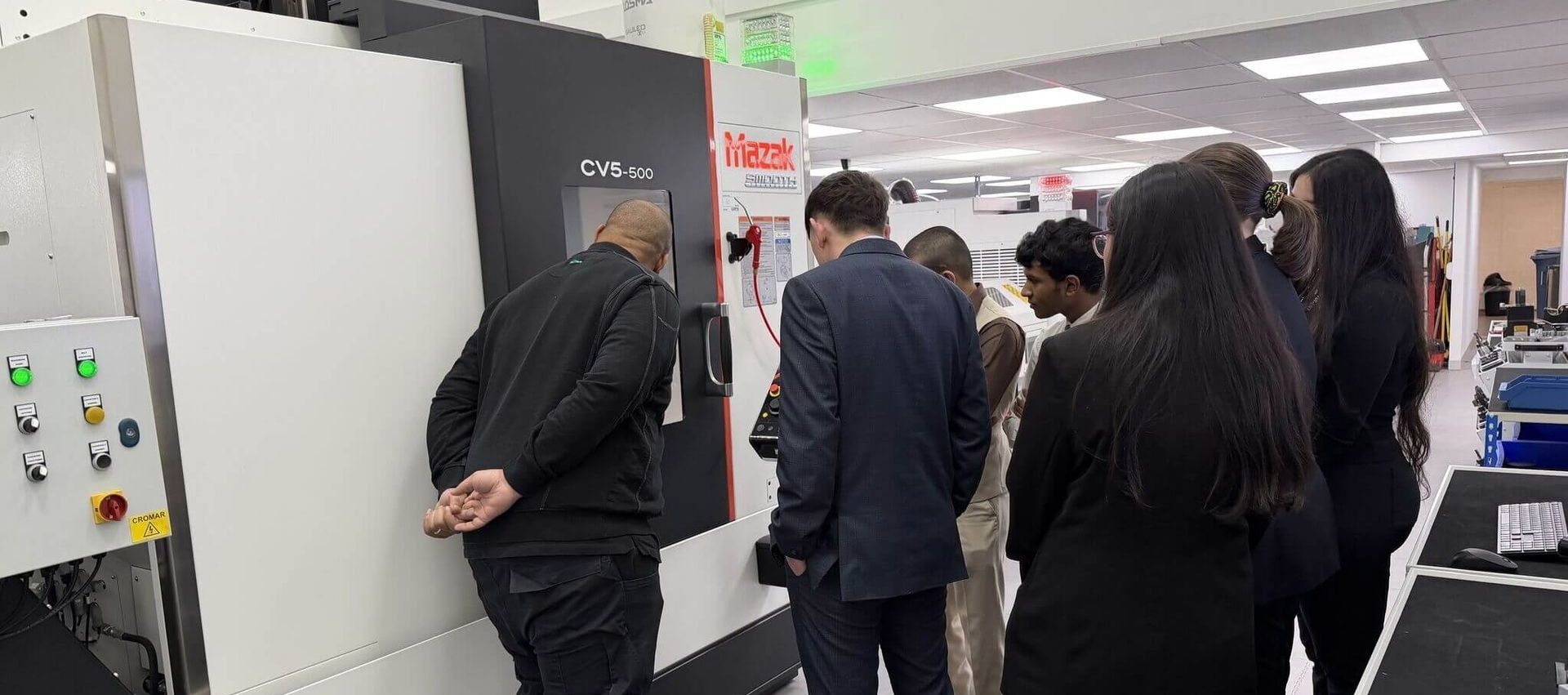
Following the introduction, the students were invited into our workshop and laboratory to see how the concepts translate into real engineering processes.
The tour followed the journey of a load cell as it moves through production, starting off with CNC machining, where raw materials are shaped to exact tolerances. From there, the students observed several stages that transform these machined parts into functional measurement devices.
These stages included laser marking and welding, strain gauge bonding, and the delicate soldering and wiring required to connect the sensor elements. They also saw how environmental sealing protects the internal components, ensuring the sensors can operate reliably in demanding industrial environments.
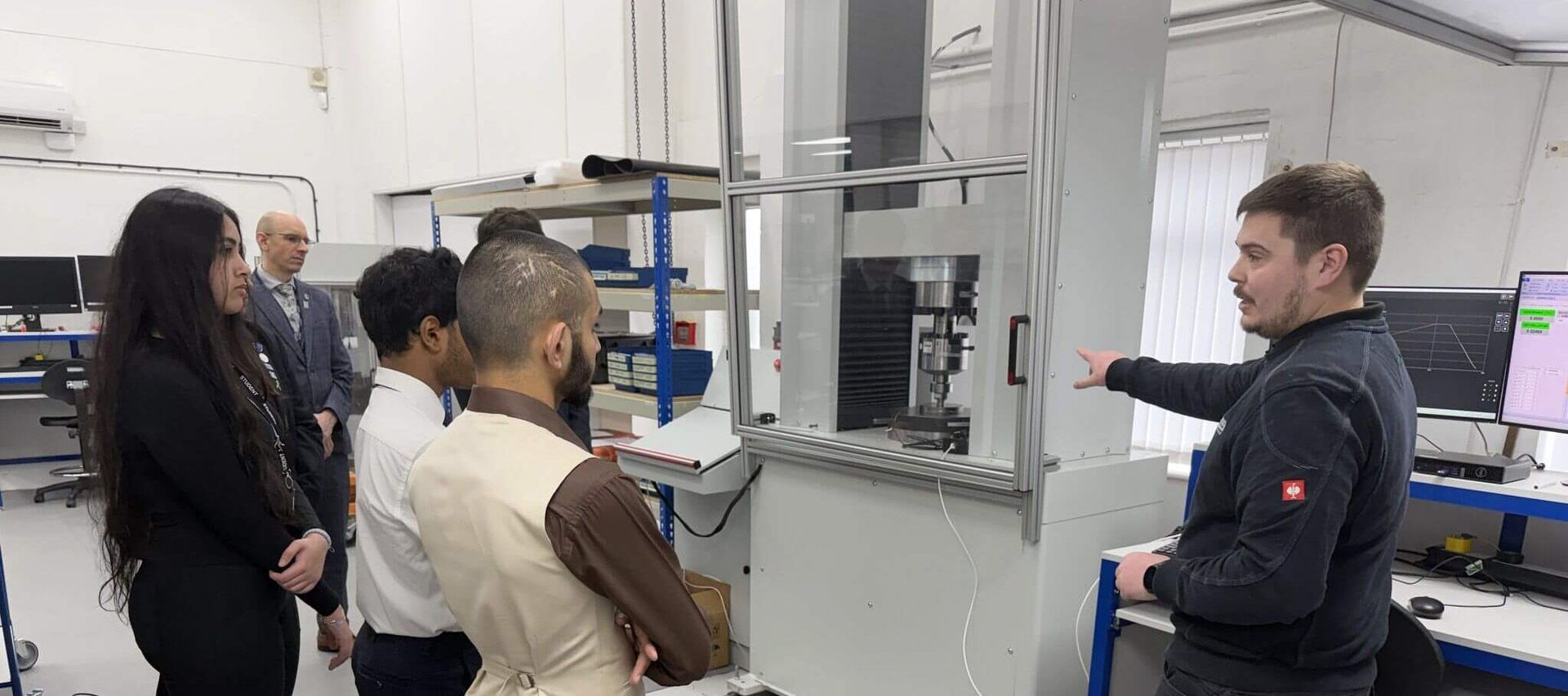
The final stage of the process involves calibration and verification, where each load cell is carefully tested to ensure it delivers accurate and repeatable measurements before leaving the facility.
Throughout the tour, the students were able to observe our technicians carrying out real production work, providing a genuine insight into the level of precision, skill and attention to detail required in specialist engineering.
Learning from Early-Career Engineers
The students then took part in an informal Q&A session with two of our early-career engineers, both of whom originally joined PCM as apprentices/placement students.
This discussion gave them an opportunity to hear directly about the transition from education into a hands-on environment. Topics ranged from the level of responsibility given early in their careers to the pace of learning required when working on real projects and customer applications.
The session also highlighted the benefits of working within PCM, where engineers are often involved across the full lifecycle of a project, from design and manufacturing through to testing and delivery.
By sharing their own experiences, our engineers were able to give the visiting students a clearer picture of what a career in precision engineering can look like in practice.
Discussing Future Opportunities
The visit concluded with a series of short speed interviews, which gave students the opportunity to speak one-on-one with us about upcoming apprenticeship and placement opportunities.
The sessions were energetic and engaging, with thoughtful questions from the students and genuine enthusiasm, covering professional opportunities within the industry.
Why Experiences Like This Matter
For many engineering students, opportunities to experiece a working environment are still relatively rare. While modern engineering education increasingly incorporates powerful digital tools and simulation, seeing real manufacturing processes and measurement systems in action provides an important layer of understanding that cannot always be gained in the classroom.
Experiences like this help connect theoretical learning with the practical realities of engineering. We would like to thank the team at the WMG Academy, for supporting initiatives that bring students closer to industry.
By continuing to open our doors to students and early-career engineers, we hope to play a small role in helping the next generation discover the opportunities and challenges that engineering has to offer.
Interested in starting a career in precision engineering? Email careers@pcm-uk.com.